Plated or filled pieces
Base metals, tungsten cores, or plated surfaces can be used to imitate gold or silver value while hiding the true material inside.
Counterfeit Risk
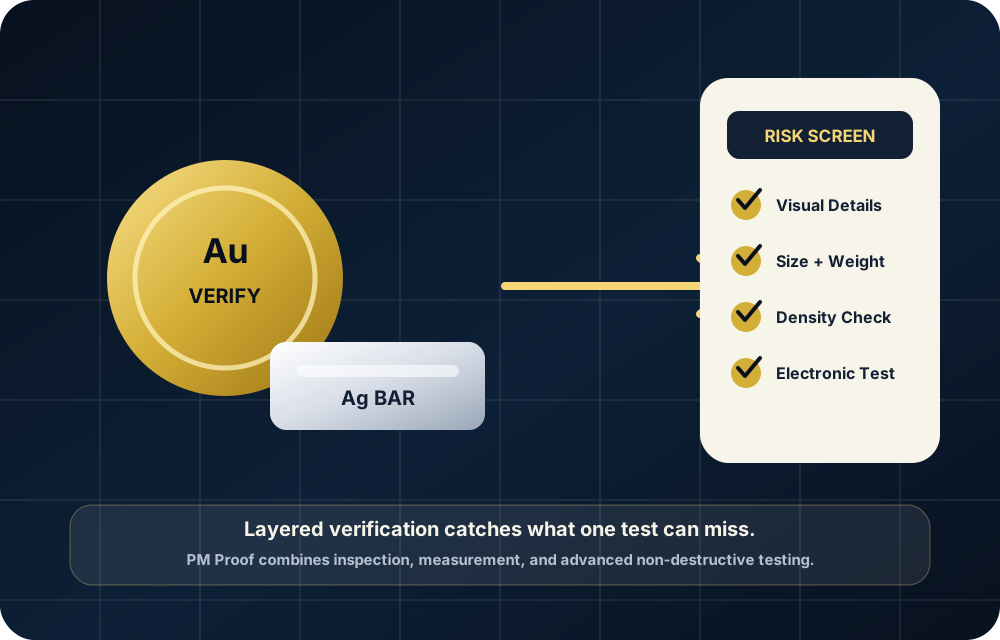
Counterfeit coins and bars can look convincing, match common dimensions, and arrive in copied packaging. The safest approach is layered verification instead of relying on one quick test.
Why Counterfeits Matter
Counterfeiters often target high-premium collectible coins, small bars, fractional pieces, and items sold through private marketplaces where the buyer has limited recourse. Even when a piece looks correct, metal composition, density, resistivity, packaging, or dimensions may reveal a problem.
Base metals, tungsten cores, or plated surfaces can be used to imitate gold or silver value while hiding the true material inside.
Assay cards, capsules, labels, and sealed holders can be counterfeited too, so packaging should support verification — not replace it.
“Too good to be true” pricing, cash-only deals, and marketplace listings increase the chance of buying a piece with no reliable guarantee.
Identification Methods
These checks are most effective when used together. A single test may catch obvious fakes, but layered testing improves confidence and helps identify more sophisticated counterfeits.
Gold and silver should not stick to a strong magnet. Attraction can indicate a ferrous core, but non-magnetic fakes can still pass this simple screen.
Sovereign bullion has precise published dimensions. Counterfeits that imitate weight often miss diameter or thickness because metals have different densities.
A jeweler’s scale can confirm the expected mass. Weight is important, but it should be paired with size and material testing.
Real silver often produces a clear, sustained ring. A dull sound can be a warning sign, especially when compared against a known genuine coin.
Non-destructive electronic testing measures how the metal responds below the surface. This helps detect plated or filled items that may pass visual, magnet, or weight checks.
Density testing compares weight to volume. It can expose many base-metal fakes, though tungsten is challenging because its density is very close to gold.
Inspect lettering, edges, relief, micro-details, radial lines, mint marks, and year-specific security features under magnification.
XRF analyzers identify elemental composition at the surface. They are powerful tools, but surface-only testing should still be interpreted carefully.
PM Proof Approach
PM Proof focuses on practical, non-destructive verification for owners, collectors, and investors who want confidence before buying, selling, storing, or gifting precious metals.
Rather than relying on appearance alone, the process looks for agreement across physical measurements, expected specifications, and advanced metal-verification readings.
Have Questions?
Contact PM Proof for verification questions, availability, and pricing.